
Heads up, if you haven’t guessed, this concerns a lot of politics and economics and social critique. I get that if you’re here for the music, basketball or movies, it might not be your cup of tea. But if you’re game, I think you’ll find it a good read. No shame if you want to skip out now. The regularly scheduled stuff is coming tomorrow.
You may have noticed a healthcare executive was slain last week. I was going to write about it, but I dunno, I had more thoughts than I knew what to do with and ended up not finishing them in a timely manner. Moreover, I was curious about the public pulse and wanted to see how the reactions differed.
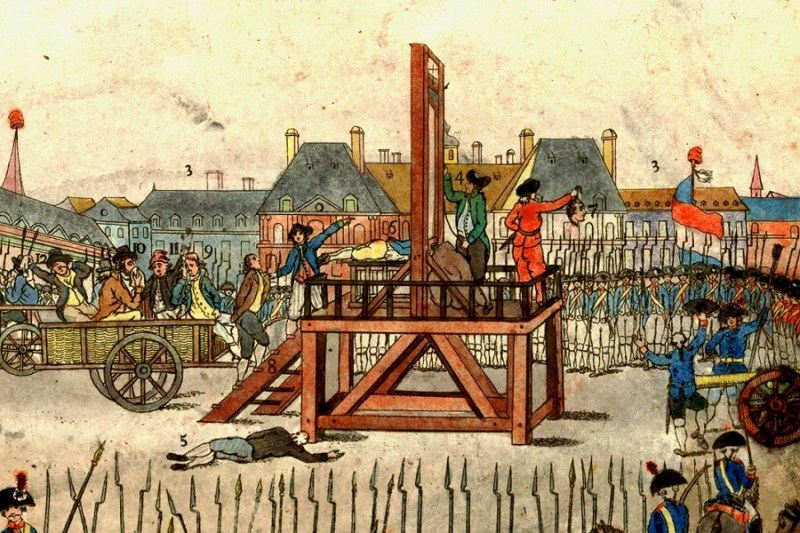
They did not, to my surprise, differ from my initial impressions: the guillotines are coming out.
Okay, okay, let’s back up. Last Wednesday morning, United Healthcare executive Brian Thompson was shot through the heart outside of the Hilton Midtown Hotel in New York City ahead of the company’s annual investor meeting.
A video of the attack, recorded from the security cameras outside of the hotel have circulated Twitter. The violence recorded is as cold blooded as can be described or imagined with the assailant covered in a hoodie and mask and used a silenced pistol.
The ensuing manhunt and investigation of the shooting undertaken by NYPD has reportedly come up with the culprit. As of Monday, Luigi Mangione has been caught and charged with Thompson’s murder. Police say they found a ghost gun, fake IDs, $8,000 in cash and a “manifesto” during the arrest.
I still don’t buy it. Not because I think he’s innocent; authorities have found matching fingerprints in addition to the manifesto outlining why healthcare executives “had it coming,” as reported by CNN. But I will wait until proof is presented in court and deliberated.
And this case should be brought to court in front of a jury. A jury trial is the only way for Mangione’s attorneys to transform this from a cut-and-dry murder case to an examination of just how disconnected the incorporated interests are from the public and how they perpetuate double-standards in modern America. There are three of which I would like to explore in order to better explicate why this happened, why it was predictable and what it portends.
First of all, let’s just examine the basics of how seriously authorities pursued this case.
“We have the drones up. We have aviation out. We have canine out,” said Jeffrey Maddrey, the Chief of Department. “An incident like this happens — we don’t spare any expense.”
Authorities traced Mangione to Central Park, where he fled via e-bike, finding disposed ammunition and monopoly money in a backpack linked to Mangione. Later they tracked down the hostel that he had stayed in, plastering a photo taken from CCTV across all channels. Putting aside that, in any murder, drone use and canine units would be an overkill response, it’s telling that it’s being done for a victim worth somewhere around $10 million USD and not the average pedestrian.
There’s the obvious double-standard. The second is how media presented reactions to the victim and the crime.

There has been a display of grief for Thompson and his family from the political class. No better example of this is Minnesota’s governor Tim Walz, who tweeted a standard two-sentence statement on the “terrible loss for the business and health care community in Minnesota.” I’m not really keen to go in hard on Walz for performing a basic ritual of society in the face of a sudden death.
A family lost a son, father, husband. In a vacuum, that is always a tragedy. I don’t want this writing to be one of finger-pointing or to turn Thompson’s person into a prop. But this is not a vacuum and the prop here is how mainstream media had largely glossed over the public’s reaction to the death.
I first read the news on Reddit. And while I wouldn’t say Reddit is a reliable source or even the fastest source—it can’t be, the site is an aggregator of news from everywhere—it does provide a sort of edge in learning about the news of the world rather than waiting for the curated evening news shows. And the comments on the matter could only be described as unsympathetic.
Threads in both /r/news and /r/medicine subreddits featured multiple deleted comments. The original post itself in the medicine subreddit was deleted and replaced with a more nuanced post. The majority of reactions lampoon responses given by United Healthcare for denied claims. Bill Burr, my favorite comedian of all time, even expressed righteous anger to the news that Healthcare companies were now hiding the information of their executives out of fear of copycat attacks.
Ben Shapiro, my least favorite comedian of all time1 tweeted in response to how shocking and pyschopathic it was to fall into this line of though. To say it’s shocking is tone deaf; the power of anonymity on the internet emboldens users to comment in ways that would shock polite company, but it can absolutely speak truth to larger issues.
People are reacting unsympathetically to the killing of an executive is because executives oversee so many injustices on a daily basis for the sake of a profit margin that to even call the healthcare system a healthcare system feels like a sick joke. It’s a system, but the goal is profit extraction at levels that seem almost inhumane.
That brings us to double-standard number three: what qualifies as murder.

United Healthcare, and a great deal of other health insurance companies, are deeply unpopular. There are a lot of personal anecdotes and reasons that can be found among any commenter or even in any real life conversation. But they all revolve around a simple perception that healthcare has trampled on a basic precept of society: caring for the sick.
There’s a great article from MSN that investigates the practices of United Healthcare under the leadership of Thompson. The insurance giant has seen its profits double since 2019 while claims billed to the company have become increasingly denied by the adoption of algorithmic artificial intelligence. ProPublica further explores these practices in a report referenced by the MSN article. The program is reported to have denied 90% of insurance claims while United Healthcare in total rejects 32% of all claims, double the industry average.
By the way, that’s the mean average. An average dragged down by Kaiser Permanente’s 7% claim denial rate. The median rate is actually closer to 20%. Still not a great look for United Healthcare, but it should be outrageous that a fifth of all healthcare claims are denied on average across the lionshare of healthcare providers.
It goes back to the infamous quote, often attributed to Josef Stalin, “one death is a tragedy, a million deaths is a statistic.”
As of 2020, health insurance companies are tied to 68,000 deaths annually in according to research from medical journal The Lancet. And yet it remains to be seen if any of these deaths could be used in a criminal trial against a healthcare executive. The only crime of which a CEO can be convicted consists of not operating in the best interests of stockholders.
When banks sold bad products to each other in 2006 and built a house of cards that nearly caused the entire global financial system to collapse, none of the top executives went to jail. When British Petroleum filled the Gulf of Mexico with crude in the worst oil disaster ever, none of the leadership faced criminal justice for their negligence. What confidence can there be that this will change any time soon?
So with all of these double-standards now explored, let all claims fall by the wayside that the death of a CEO who oversaw the largest denial of care to people at their most vulnerable is shocking. It’s not shocking. It’s not even remotely out of the realm of possibility because of an actual, attributable quote from John F. Kennedy, “those who make peaceful revolution impossible, make violent revolution inevitable.”
Calls for the United States to adopt universal healthcare have been mounting since the sixties. One of the landmark pieces of legislation this century was the American Care Act. It was passed almost entirely by a Democratic controlled congress and was a key piece of the Obama administration’s portfolio. However, it also stopped short of universal healthcare due to industry lobbyists and the obstinate Joe Lieberman.2
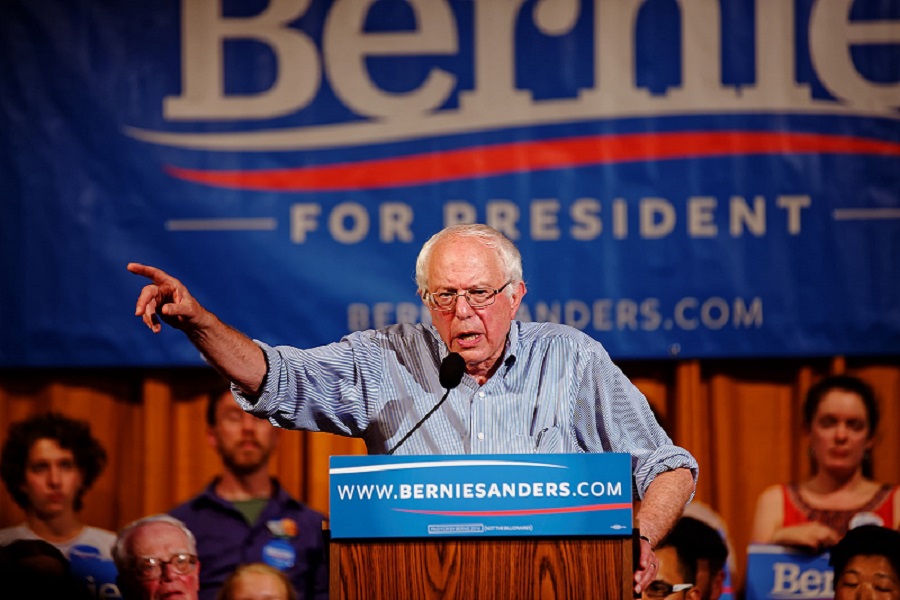
Congressman Bernie Sanders now leads the latest charge. The Vermont senator introduced a bill that would create a Medicare-for-All expansion in 2018 and promoted the strategy during his presidential bid in 2020. The biggest complaint has always been an exorbitant price-tag that would explode the federal budget.3
Two other trends commensurate with these arguments surrounding universal healthcare and an increase in denied claims have developed: a decrease in government trust and a massive, almost comical increase in guns.
More and more Americans have lost faith in the governments ability to respond to what ills their society. A Pew research poll found that 62% of Americans under the age of 30 believe the government is unable to solve its largest problems. Among all voters the split is an even 50/50, but it does not bode well that emerging voter blocs do not believe in government’s ability to address critical issues.
This research corroborates a study conducted in 2014 by Martin Gilens and Benjamin I. Page, Professors of Politics and Decision Making at Princeton and Northwestern University, respectively. Using a mathematical model, the pair of academics uncovered that despite popular opinion on certain bills or actions, congress largely ignores these opinions. More often the opinions of business interest groups and mass public interest groups are considered, rather than the opinions of the average citizen.
Then there’s the Supreme Court’s ruling on Citizens United vs. Federal Elections Commission. A decision that effectively equated money to speech, legalized the creation of nominally independent Political Action Committees and liberalized the introduction of dark money in political elections. This allowed for the richest persons and families in America to sway elections like never before.
This is further compounded by a study from the Institute for Policy Studies which posits that not only has the wealth of the richest people in society exploded, but that this wealth is being jealously guarded and prevented from reentering circulation to help the poorest citizens. Moreover, the wealthy use shell foundations to avoid taxation, allowing them to hoard ever expanding wealth as reported in the Jacobin. Today’s perception of wealth inequality levels match only one other society in recorded history: France on the eve of May 5th, 1789.4
And then there’s the increase in gun ownership. Mangione is one of many Americans who had acquired a “ghost gun.” That is a gun created by 3D printing. Mangione was an engineer by profession, so creating such a weapon was not hard. Nor is it necessary, there were an estimated 400 million lawfully unregistered firearms in the United States in 2017 according to a Small Arms Survey report. And that was seven years ago, before 3D printing became as widespread as it is now.
Regardless of academic studies and reports and news bulletins however, perhaps the closest pictures of reality right now can be found in the ancillary actions and developments surrounding the murder.
The first picture came when healthcare companies began to remove images and information of their leadership from their websites in fear of copycat attacks. Then healthcare company stocks began to fall in the wake of the killing, reflecting a flash of worry on the future of the industry. These are all likely temporary developments. For the enduring picture of reality as to why this happened and what it portends, one had to look inside Mangione’s backpack in Central Park.
On the unused ammunition, authorities found three words: “deny,” “delay,” and “depose.”
The first two words are eerily similar to the type of language one would find in their average letter explaining why an insurance claim has been denied. But the third? That clarifies the order of events in Mangione’s thought process when the wealthy shirk the social contract.
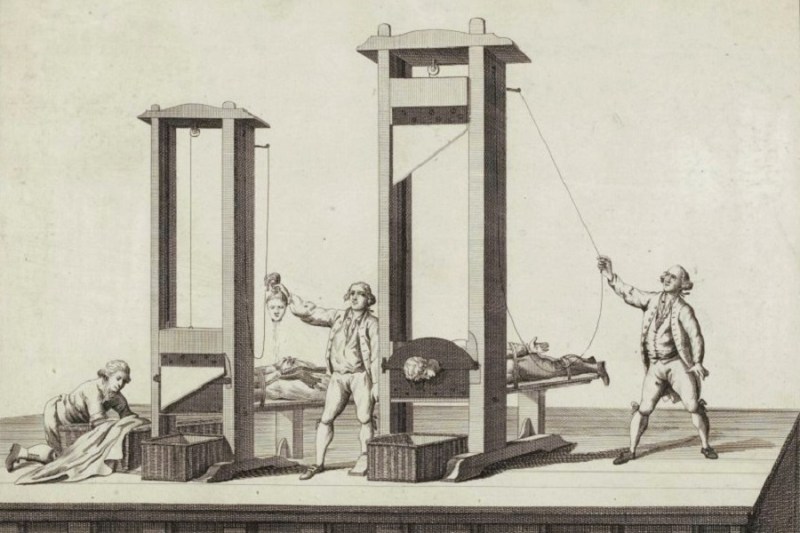
For decades now, the machines of government and business have been denying that problems exist, delaying solutions from curing them, and thereby deposing the public peace. This does not keep them safe. If anything they have denied problems, delayed solutions and most crucially, deposed themselves from a position of respect and authority. That was the order of the day for the French revolution. By the time the king was caught fleeing France for Austria, the guillotine was just the coup de grâce.
Do I want this to be our future? No, because once violence is justifiable against one political class, it’s justifiable against all political classes. Once the king lost his head, everyone else was opening to losing theirs. But there should be no stupefaction that, when officials allow the proliferation of suffering and hand the populace guillotines, all problems come to be seen as a matter of heads and shoulders in a court of public opinion.
That’s why media companies and certain talking heads don’t want the public consensus of sympathy for Mangione to be reported on in a widespread manner. Like Meursault in Albert Camus’ landmark novel, The Stranger, the powers that be want this case to focus on a discussion of Mangione’s methods and lack of humanity. And yet, it has to be asked: who lacks humanity? The man who denies thousands the basic human right to care, or the man who kills him? Probably both. Both can be true.
But perhaps the truth is that the common person should both be above public slayings while the elite should be brave enough to admit that their abusive economic system has guided us to the precipice of violence. Perhaps then and only then can we save us from ourselves. It would require a modicum of self-awareness and a great deal of therapy to do so.
I just hope our claim isn’t denied.
Patrons receive early-access to monthly poetry, short stories and short films as well as exclusive access to Patron-only short stories, poetry, and behind-the-scenes content. Every additional Patron lets me continue my dream of being a full-time creative, and I appreciate your support.
1 Among other things, he is a shell of a person I resent sharing a first name with. Were I a leading member of the Council of Bens, I would revoke his privileges posthaste. Fuck Ben Shapiro.
2 Of all the chances the American public had to remove the yoke of private health insurance and install universal healthcare, that was the moment. More than any other cameo by a bird on Bernie Sanders podium or call from Alexandra Ocasio-Cortez for Medicare-for-All, that was the moment. And Joe Lieberman stopped it dead. Fuck Joe Lieberman. He’s dead now. Fuck him.
3 This is true. There’s no denying that. But it’s a cost that is removed from the healthcare bill and placed into taxes. Moreover, the economies of scale imply a cost reduction. The basic function of healthcare is socialized costs, wherein members pay for a group fund that can be used to pay the costs when one member falls ill. Universal healthcare would expand the group to everyone, therefore lowering the costs for everyone. I don’t know why I need to explain this, but it feels like the moment universal healthcare is discussed, this basic knowledge goes right out the window.
There’s also a philosophical argument that a government’s greatest expenditure reflects a society’s focus. Because the United States’ budget overwhelming goes towards military needs, it reflects a society geared toward the promulgation of war. This is not a case for doing one or the other—the US is both wealthy enough and powerful enough to be policeman and doctor—but were a larger portion invested into healthcare, it stands to reason that would reflect a societal concern for the welfare of its fellow citizens.
4 The truth of the matter is that the baseline for poverty in modern America vastly outdoes the baseline for poverty in monarchical France. Moreover, it’s very hard to prove such a claim on account of the lack detailed data. But a study published by the European Review of Economic History shows how the French old regime had a GINI coefficient of 0.59; one more comparable to South Africa’s current rate of 0.62, rather than the United States’ rate of 0.43 as of 2020.
Still there is something to be said that the top 20% of Americans brought in 52% of the income in 2020, compared to the top 20% of French bringing in 66% of income in 1781. That number is far more comparable and telling of where income inequality is heading and explains that while the reality is far less accommodating to the perception, what matters in the context of revolutionary reality is perception.


