
I called it “The Mountain.”
I would climb it once per year. I would indulge in every vista, gaze over every great chasm and I would wander. I would wander through every vale on the path to all nine of the summits. It only seemed right that it would be nine. J.R.R. Tolkien was a chief influence and he loved the number nine
And that’s that what this mountain is: nine albums, one day, one artist.
Led Zeppelin.
I have not climbed this mountain in a while. At some point, the mountain was no longer a challenge to relish, nor a gauntlet to be run. Whether it was eight studio records and a Coda, or an alternate route through the Song Remains the Same,the ritual had become a chore and so the ritual fell out of favor. Climbing the mountain became something I once did, not something I do.
The love is still there, but dormant. The trees, ferns and snow may obscure them, but the paths still lead to the top. The rhythm has left its beaten tracks and the lyrics still switch up and down me. And perhaps now I’m worried, worried that I am too old to do the whole climb again. That I won’t remember the words or I’ll forget the steps.
So, in some ways, I cheated last night. I took a helicopter. I bought the ticket, I sat the seat and I saw Becoming Led Zeppelin.
Hey there! Casual Rambler here, just wanting to thank you for reading my blog. I try to avoid marketing myself and I don’t like paywalling content. That’s why most of this website, if not all, is free. However, subscribing to my Patreon helps me keep doing it. Patrons gain exclusive short stories as well as early-access to monthly poetry and photography posts. Thanks again and please enjoy the rest of the site!
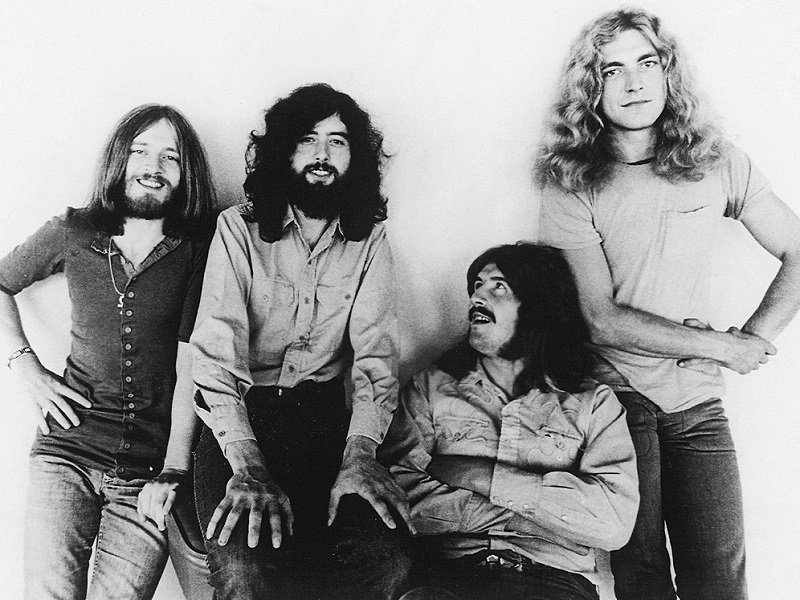
Honest question, is it weird to think that a documentary deserves a sequel? Despite Becoming Led Zeppelin ending exactly as it should—with the essence of the quartet refined into crystalline form—it also ends with more tales to tell. Like it could be something more. The first episode to a hypothetical triptych.
The story of Led Zeppelin is one of inherent cinematic value. The grouping of Jimmy Page, Robert Plant, John Paul Jones and John Bonham has a beginning, middle and end. Returning to this period of life is to watch the memoirs of an elder statesmen.
Page is a producer, curating the band’s legacy. Jones has returned to what put him to work in the first place, arranging and composing. Plant, meanwhile, stays forever restless. Always searching for his next muse, his next project.
And they all sit grey-haired and separate, each of them booking one-one-one interviews with director Bernard MacMahon rather than partaking in a group chat, highlighting the likelihood that the three never again take the stage together.
It’s a complete flip of the switch on a contemporary like Rolling Stones, still touring despite the death of Charlie Watts. A stark contrast to any band aging into their legacy act era. Even Queen, after the death of Freddie Mercury, attempted to soldier on. Same for the Doors. And same for the Grateful Dead, who probably have more spin-off and tribute bands than there are bars in the Bay Area.
But not Led Zeppelin.
There’s no ongoing story. Only brief moments of an epilogue. A Coda here, a reunion there, a Page + Plant album off in the distance.1 When that grouping could no longer be, than no further could Led Zeppelin. So were there a part two and three, it would be easy to imagine the titles: Being Led Zeppelin and Unbecoming Led Zeppelin.
For now, it’s simply Becoming Led Zeppelin, a story of inherent interest. An origin story. The tried-and-true formula for any superhero film, any larger-than-life biography. And that was Zeppelin, long-haired and bare chested.
The moments of that classic magic come in two places; firstly, when MacMahon just lets the music do the talking, overwhelming the senses, racing along every forgotten trail and vessel of the body until they can’t help but sing-along, headbob, tap a foot or break out the air guitar; and secondly, when the archival voice of Bonham speaks to his fellows from far beyond the veil.
You can see it in their eyes when they hear Bonzo’s voice. The corners glisten, they’re no longer the elder statesmen. They’re bandmates. And they’re participating in the story of how they found each other.

This limited focus does make for a documentary that’s not quite the tell-all that music historians can savour. There’s no reckoning with the band’s egregious lifting of material, no addressing the scandalous niches of their story. And that lack of bravery to at least tackle some of these issues is where the film most suffers. But that’s the nature of an “official” biography, the subject has every right to dictate the story as the legal department sees it, not as critics want it.
One can see it in the credits; down past the all the cinematography talent, the special effects artists, the archivists and all the other talent, there’s credits to the legal advisors. Advisors to both Plant and Page, gently reminding everyone that the focus is to be telling the past, not litigating it.2
But this choice does leave out some important standards that the band set. Beyond having a sound that could split heaven and sunder earth, the band’s manager, Peter Grant, was a mover of both for cash flow. His imposing presence realigned the balance of power for touring artists by dictating that the lionshare of the revenue go to the band, not the venue.
Zeppelin themselves were the main event. And they were the keyholders to the gate. Where the Grateful Dead were happy to let their fans tape and share show after show, Grant once threw water on a taper’s deck. Only recently has the group begun to allow others the use of their music.3
And that’s where this film succeeds. There are to be no audience recordings; if someone wants to experience the Hammer of the Gods, it is to be done so on the Hammer’s terms. It’s their mountain, you’re just climbing it.
1 This footnote is justice for Jonesy; I understand that Robert Plant did not want to invite rumours of a Zeppelin reunion when he and Jimmy Page started working on their pet project in 1993. But to not call up John Paul Jones and explain to him why he was being cut out was unjust to the talent and texture that Jones brought to the band as a professional arranger. Not least when the album is named after one his songs! It required a whole @$%^#$! orchestra to replace Jones and Bonzo.
2 To be clear: yes, Led Zeppelin failed to properly credit the songs that they took from black bluesmen. Yes, the intro to “Stairway to Heaven” sounds somewhat like “Taurus” by Spirit. Yes, there was a groupie and, yes, there was a fish. Yes, Jimmy Page dated a 14 year old. What we do with these stories in regards to listening or not listening is beyond the scope of Becoming Led Zeppelin, however. Is it fair that onus of educating oneself is to be done by the inquiring listener? No, not really. But the information is out there, and it would be unbalanced of me to omit it.
3 We can thank Jack Black for this. The man literally begged Led Zeppelin on behalf of Richard Linklater. Where it might seem tactless and money-grubbing in a commercial, a movie like School of Rock would have been woefully incomplete without visitation rights from the Gods of Rock for this scene.

 The Casual Ramble