
I began writing this after I heard of Bill Walton’s passing. It actually was the first thing I saw when I woke up that morning of May 27. I was going to pitch this to my editor, but found that what started as an article on 10 quotes had become an obituary/essay that was taking too long to be newsworthy. Because it took so long, I felt had missed any chance to really talk about who Bill Walton is.
In reality, I had just missed my chance to meet Bill Walton in life.
I do not try to make a hero or idol out of people. It’s a dangerous thing to do, especially after they die. But I do believe people are nexus points where ley lines of interests, attitudes and thoughts either converge or diverge. As a light of life, the Big Red Deadhead represents a lot of things that converged in my life: first basketball and the Portland Trail Blazers, then the Grateful Dead, writing and alternative politics.

The conversation around Walton has rightfully revolved more around the kind of person he is, rather than the basketball player he was. But I think there’s a certain resonance within Portland that revolves around his passing with the question of who is the greatest Trail Blazer of all time. This is especially sensitive given that his heir apparent, Damian Lillard, no longer dons the red and the black.
Walton’s passing does not make the case. This is not like a presidential popularity poll.
Rather it was Walton’s life that makes the case. Without Walton, the Portland Trail Blazers would not nearly be the success story that they are; a representative of when the city made the big-time as a landmark in the history of American sports. I remember practicing my jumpshot and layups as a kid in the cul-de-sac, imagining myself alongside Walton as the Trail Blazers won their first and only championship.
I had no concept of Julius Erving, Maurice Lucas or Jack Ramsay. No idea of which game, the score or even time day. Not even an image of Walton ripping off his shirt and throwing into crowd. But I was there, and I knew it had to come down to the last possession. If the Blazers were going to win, I had to get the ball to Walton.
When I went to college, I went on the strength of my ability to write. What I discovered was the music is what kept my pencil to the paper, my fingertips to the keyboard: the Grateful Dead. When I learned that Walton was a Deadhead, I became positively giddy. When I read his autobiography, I was enthralled at how the music carried him through the high points and low points of his career.
In my mind, I was going to have a basketball career as illustrious as Walton’s, playing for my hometown team before retiring in earnest to begin a career as an author. There would be nothing sweeter. Now I’m just a writer, scribbling along about my hometown team and trying my best to make it.
Walton still exists, he’s no less of a person with his passing, no less a point in history should everything turn to dust. Even if Walton is no longer remembered in the future, I remember. I hope these 4000-odd words represent how much he mattered to a lot of the things I write about. It took a conversation with my grandmother to convince me that they are still worth publishing, even if they aren’t as timely. I hope they make everyone who knew Grateful Red smile.
Unraveling Bill Walton
Bill Walton, iconic center and multiple times NBA champion, passed away in the morning of May 27th after a prolonged battle with cancer. He was 71.
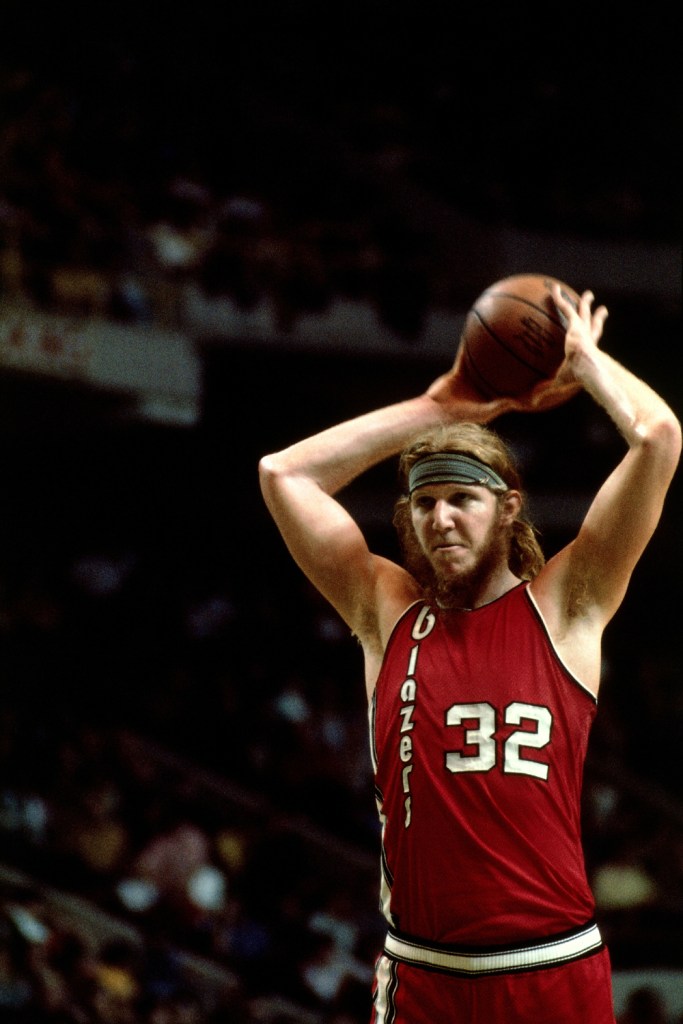
The Big Redhead as he was affectionately known, prevailed at every level. Walton won two college national championships and two championships in the professional ranks. His professional career spanned 13 years, playing for the Portland Trail Blazers, San Diego Clippers and the Boston Celtics but his actual playing time was far less.
Walton battled with numerous foot, leg and back ailments throughout his career and well into his retirement. The center underwent 37 foot surgeries alone in his quest for health. However, there’s a better metric to explore the virtuoso center’s life: quotes for, about and by him.

“Basketball was a sanctuary for me, it became my religion and the gym was my church.”
Bill Walton
In an article about Bill Walton for TIME in 1974, the sentiment already existed that Walton was the greatest college basketball player ever. If he was not, then he was second only to his predecessor, Kareem Abdul-Jabbar. Legendary UCLA Bruins head coach Wooden recruited Walton after hearing about him through his assistant, Denny Crum. A high-school phenom who played defense like Bill Russell and passed with the vision of a guard, capped in red, curly hair?
Coach Wooden would not believe it, not until Crum convinced him to attend a game at Helix High School in La Mesa. Walton played under Gordon Nash at Helix, winning two state championships and going undefeated in his last 49 games at the school. According to Crum, when they returned home in Los Angeles, Wooden exited the car, turned and said, “well, he is pretty good.”
In Walton’s autobiography, Back From The Dead, Waltondescribed having dinner with Wooden as a homely, simple meeting. Rather than promises of new jobs, jewelry or the head cheerleader’s phone number, Wooden spoke plainly: “The only thing I can promise you is that I’ll give you a chance—a chance to be a part of something special.”
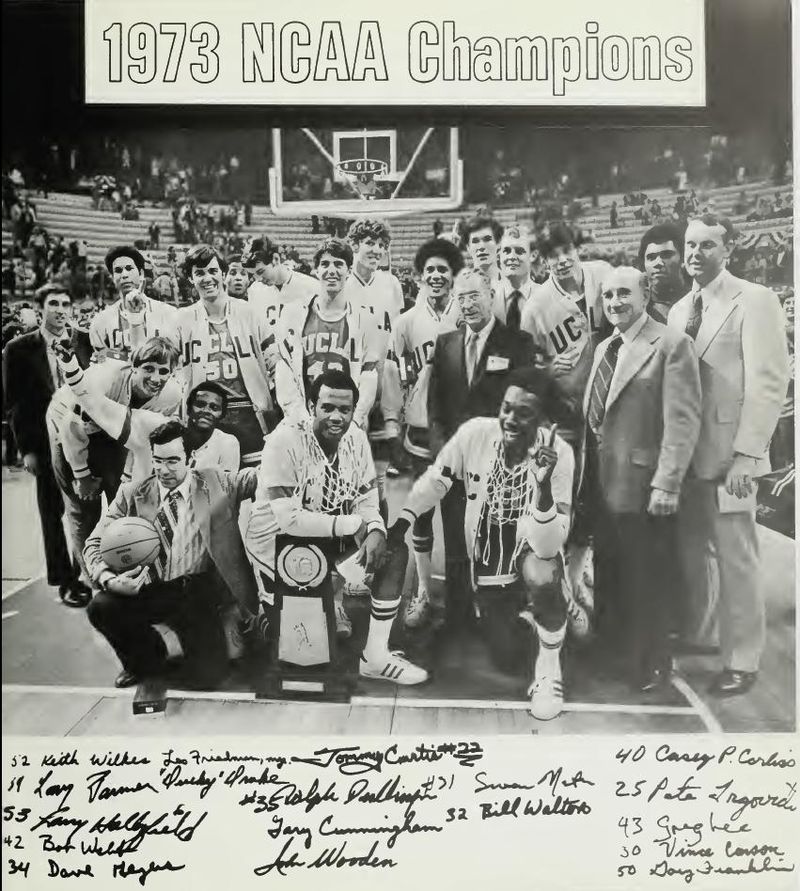
The reality is Bill Walton would have only refused John Wooden if John Wooden had refused Bill Walton. And because neither refused the other, Walton became the engine for something special. Averaging 20.3 points and 15.7 rebounds over three seasons with the varsity UCLA team, he won the NCAA Championship twice, the Naismith Award thrice and was selected to the All-American Team all three years of his varsity career.
His game was based on his ability to defend, rebound and pass. Scoring was secondary to Walton. He could score at will when called upon, as he did against Memphis in the 1973 NCAA title game, a 44 point, 17 rebound performance on 21 for 22 shooting. But Walton himself would say that his favorite part of the game was starting the fastbreak. Finishing it was secondary.

“I’ve always been mainstream… well, depending on what stream you’re standing in.”
Bill Walton, The Luckiest Guy in the World
In 2023, ESPN released a four-part 30 For 30 documentary centered on Walton, The Luckiest Guy in the World. At UCLA, Walton was more than just a basketball player. He studied history, went to concerts for the Grateful Dead, Bob Dylan, Neil Young and Crosby, Stills & Nash, picked up vegetarianism, transcendental and frequently involved himself in the protests and demonstrations on campus.
One particular demonstration occurred on May 10th, 1972, when Walton and his fellow classmates came together to occupy an administration building. After ending their occupation early in the morning, Los Angeles police arrived to disperse the crowd. As they moved the crowd of protesters through the campus, a student from the Haines Hall opened a firehose on their rear guard before exiting the building with the same hose as an escape rope. Walton describes scenes of police brutality, and being arrested with 51 of his classmates after blockading the entrance of another hall.
Coach Wooden would bail him out of jail, but not before expressing his disappointment to the young revolutionary and then suggesting he write a letter as they parted ways. Walton only smiled as he recounted his genius; borrowing some stationery from Wooden’s secretary, writing a “manifesto” that implored Nixon to resign and then convincing his teammates to sign the letter with him. Wooden would not endorse it, but his name was in the letterhead and Nixon would eventually resign to Walton’s glee.
“I’ve always been mainstream,” Walton comments in the documentary. When a producer argues, Walton can only smile and say “well, depending on what stream you’re standing in.”
“It’s the things you learn after you know it all that count.”
John Wooden
These are the words that coach Wooden gave Walton upon graduation in 1974. Walton did not win a championship in 1974. The Bruins, who featured Walton alongside Jamaal Wilkes, Dave Meyers, Marquess Johnson and Greg Lee, lost in the Final Four to David Thompson and the North Carolina State Wolfpack.
It was a tough year in general for UCLA. After repeating as champions in 1972 and 1973, the Bruins were odds-on favorites for the 1974 NCAA Championship as well. But after rolling through the non-conference schedule, Walton would suffer a broken back in a game against Washington State and the undefeated Bruins would lose against arch-rivals Notre Dame, their first loss in 88-games.
Walton played that game after spending 11 days “in the UCLA hospital, swimming pool, bed, the training room, discovering acupuncture and the fine practitioners of every imaginable healing art” before strapping on a steel-rod corset for the flight to Indiana. Lee, who recently had a falling out with Wooden, did not play after halftime. The Bruins’ 17-point lead dwindled in the second half as UCLA turned over the ball frequently and eventually lost 71-70 to the Fighting Irish.
Walton blamed himself in his biography, underestimating the power of luck and disturbing Wooden’s pregame ritual and stealing the coach’s “lucky” penny. He tied most of the misfortune in his life to the Curse of the Stolen Penny. This curse runs counter to his claim as “The Luckiest Guy in the World” but more than that, it speaks to Walton’s life up to that year: he had known nothing but winning. It was normal to him. But just as there were lessons in winning, Walton would receive an education in losing as well.
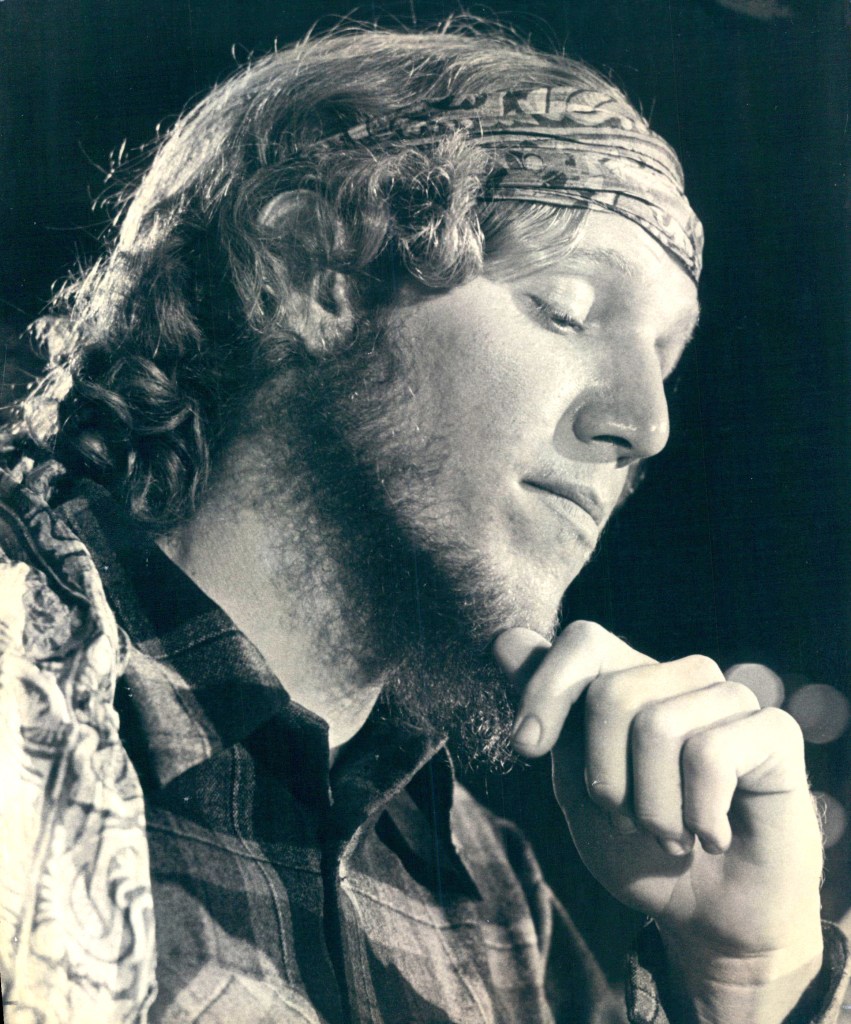
Bill Walton (courtesy of Richard Darcey) 
Patty Hearst (via San Mateo Sheriff’s Office) 
David Halberstam (via Simon and Schuester)
“The first law of public relations for the concerned athlete: thou shalt be political… only when thou art playing at thy highest level of performance.”
David Halberstam, The Breaks of the Game
Drafted number one overall by the Portland Trail Blazers in 1974, Walton experienced basketball in a way completely counter to his time in Los Angeles. Walton loved the state of Oregon, made fast friends with teammates (including former Bruin, Sidney Wicks), gained plenty of nicknames (Big Red and Chief, mainly) and praised the coaching of Lenny Wilkens and assistant Tom Meschery. But for two years, the Trail Blazers could not shake loose of their losing ways.
The largest issue was undoubtedly the young center’s health. After the draft, Portland’s team doctors suggested a knee operation they hoped would relieve his pain. Thus, before his rookie season even began, Walton was already recovering from a knee operation, a recently broken back and his chronically sore feet. Much later, Walton’s feet would be a case study for stress fractures.
The other part of the issue was ascribed to who Walton was, or appeared to be. Despite seemingly fitting in with a state that prided itself on an outdoorsy attitude and independent spirit with a pristine environment, Walton’s politics did not. In David Halberstam’s opus, The Breaks of the Game, he prescribes the first law of public relations for the concerned athlete. Walton continually, perpetually, almost flagrantly broke it while injured, meeting and hosting activists like Cesar Chavez and Dick Gregory,
The flashpoint that most concerned the state of Oregon, however, came with the Patty Hearst kidnapping by the Symbionese Liberation Army. The militant left-wing political organization, abducted the young heiress and then robbed a bank, purportedly with her support. When police cracked down on the organization, Heart disappeared.
Reports say she was whisked away by Jack Scott, Walton’s housemate and a social critic of professional sports in America. According to Walton and Scott, the FBI hounded his friends, contacts and acquaintances at every step for two years over the issue. This only drew more ire from a city that just wanted good basketball and less distractions.
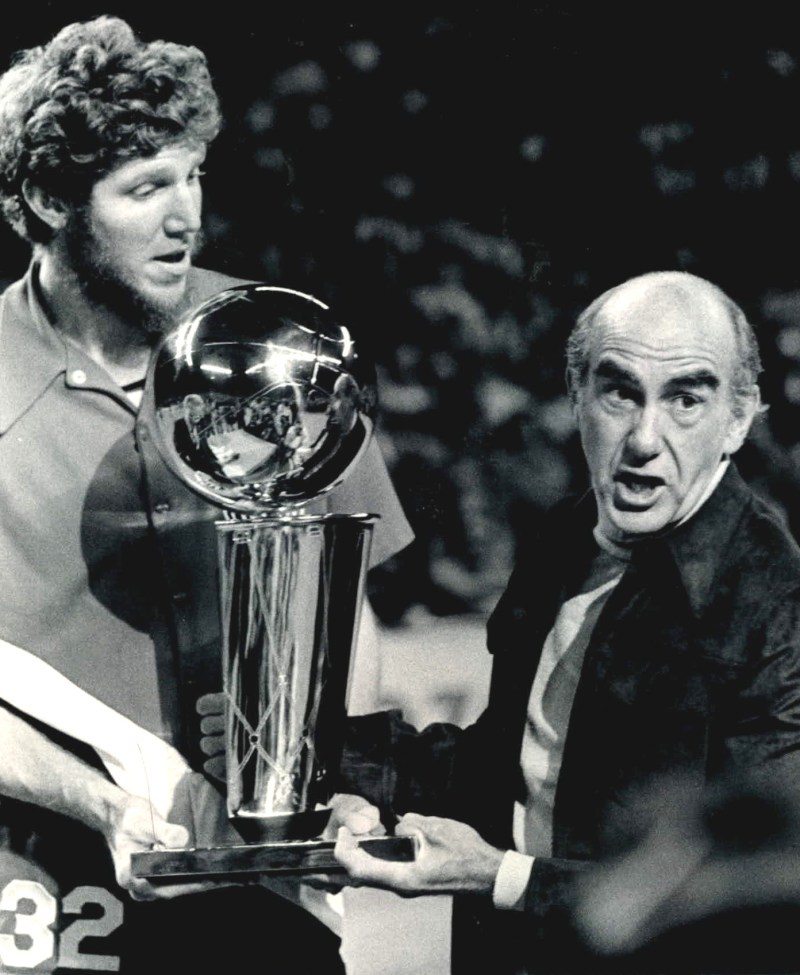
“I have never coached a better player, I have never coached a better competitor, and I have never coached a better person than Bill Walton.”
Jack Ramsay
Notwithstanding the criticism of his politics, friends, music and vegetarian diet, Walton showed his flashes of potential. Ticket sales rose and the Trail Blazers finished 38-44 and 37-45 in his first two seasons, a marked improvement over years of impoverished play. With Lenny Wilkens, Portland drafted Lionel Hollins and Bob Gross, key starters for the seasons to come.
Management, however, decided Wilkens would not continue with Walton. The Trail Blazers lured Jack Ramsay from the Buffalo Braves to join the team in the summer of 1976. With Ramsay came the bruising Maurice Lucas and cagey Dave Twardzik from the ABA, and the speedy Johnny Davis from the draft. Gone were the contesting personalities of Sidney Wicks and Geoff Petrie. In their place was a team built around Bill Walton.
In Scott’s account of the 1976-1977 postseason, he quotes Walton after meeting Lucas in September, “I just wish the season started tomorrow. We’re going to have a damn good team.” Walton was more right than he knew; throughout the season, Portland stood atop the Western Conference, finishing 49-33 after brief injury scares in February. Using modern statistical analysis, the Trail Blazers actually led the league in Pythagorean wins, with an expected win-loss of 55-27.
In the playoffs, Walton paired with Lucas to lead Portland over Artis Gilmore’s Chicago Bulls, 2-1, then dispatched David Thompson’s Denver Nuggets, 4-2. In the Conference Finals, Portland faced off the mighty Los Angeles Lakers, recently rebirthed by the addition of Kareem Abdul-Jabbar, sweeping them in four games.
For the NBA Finals, Walton and the Trail Blazers had one more foe to conquer: the all-star Philadelphia 76ers and their much ballyhooed roster of Julius Irving, George McGinnis, Doug Collins, World B. Free and Darryl Dawkins. For a moment, the team from Portland looked like they could not stand up to the task. Until a brief scuffle broke out in Game 2 between Lucas and Dawkins. Returning home, Philadelphia discombobulated as the Blazers picked up two wins, the momentum, and eventually the series for the franchise’s only championship.
Walton finished the clinching game with 20 points, 23 rebounds, 7 assists and 8 blocks. Fittingly for their first ever playoff berth and championship, Portland also won the NBA’s first ever Larry O’Brien trophy. To this day, they remain the youngest team to ever win the NBA Championship. In a single year, Ramsay and Walton proved to be the perfect pairing of coach and player.
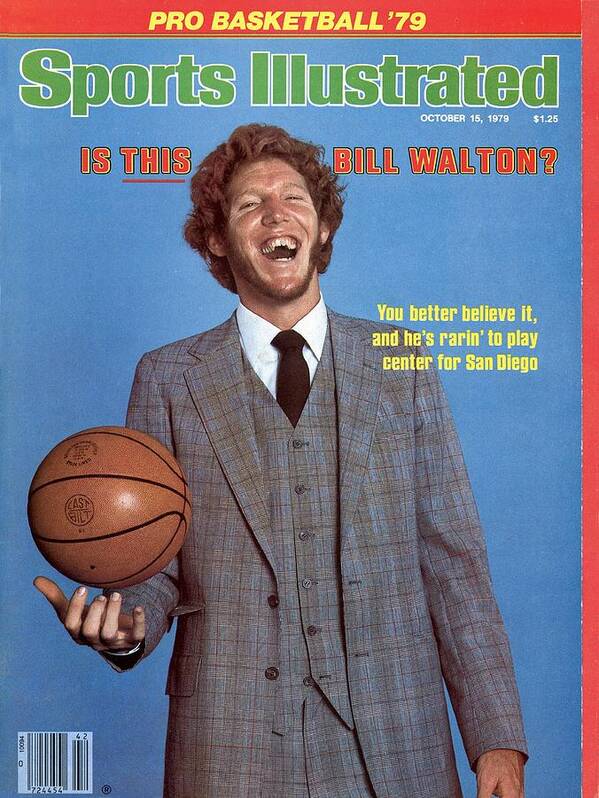
“I could not get the job done in my hometown. It is a stain and stigma on my soul that is indelible. I’ll never be able to wash that off, and I carry it with me forever.”
Bill Walton, ESPN
Life for Bill Walton from 1976 to early 1978 seemed like a breeze. In the central casting for the NBA’s next dynasty-to-be, he played the principal character. The Blazers cruised to a 50-10 record and the MVP trophy was more or less waiting in the wings for Walton. If the league had inaugurated the Defensive Player of the Year laurel in 1978, Walton would have probably won that too, starting a club that only Michael Jordan, Hakeem Olajuwon and Giannis Antetokounmpo have since joined.
But then the bugbears began to appear again, the stress fractures in Walton’s feet worsened and calamity finally struck during a second round match-up with the Seattle SuperSonics. Walton left the second game after only 15 minutes with a left foot broken completely in half. Seattle won the series 4-2 and in the offseason, Walton demanded a trade citing mismanagement by the Portland medical staff.
The team refused, and Walton sat out for an entire season. When Walton returned to the NBA, he signed with the San Diego Clippers for generous compensation that sent Kermit Washington, Kevin Kunnert and picks to Portland. However, injury woes plagued the big man evermore as he played 102 games out of a total 410. After his fifth season in San Diego, the Clippers left for Los Angeles.
The pain of leaving San Diego burned Walton as much as the heartbreak of losing to Notre Dame in college. He expressed it to ESPN writer Arash Markazi with as much drama and vigor as is his wont. It might seem silly or melodramatic, but for a winner like Walton, losing just will not do. And when it came time to wash his hands of the Clippers, he did so without a second thought.
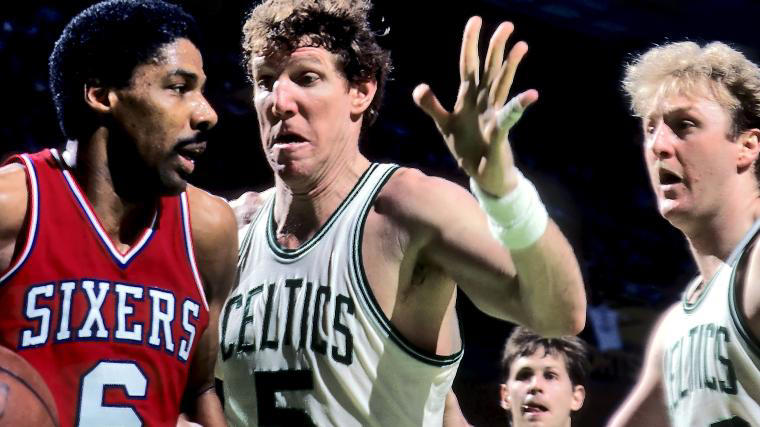
(C) Getty Images
“I went outside, got down on my hands and knees, and started rubbing lots of the Larry Bird driveway dirt all over me. When I was done, I scooped up some of the loose, moist earth and filled he jar, closing the lid tightly when it was full… Larry and [his mother] thought I was nuts.”
Bill Walton, Back From the Dead
In 1985, Bill Walton was licking his wounds after a tough stretch with his former hometown team. The acquisition of the team by Sterling and subsequent move to Los Angeles meant Walton no longer had any allegiance to the franchise. As with the Trail Blazers, once Walton felt that he was no longer a priority, he began to shift his own.
Per Back From The Dead, Walton describes a league that was changing, fundamentally, from the league he had entered in the mid-70’s. Big money endorsement deals, an emphasis of entertainment, and the rise of the superstar swingman who could cut through the big men of yore. He called Boston Celtics team president, Red Auerbach, to plead his case after being shot down by Jerry West and the Los Angeles Lakers. Auerbach was in a meeting with Larry Bird at the time, and asked him if it was worth the risk. According to Walton, Bird only said “go get him.”
When the center came to Boston for a physical, the doctors nervously debated clearing him for play. As Walton tells it, the impatient Auerbach burst into the room asking what was taking so long. The doctors pointed out their concerns and Auerbach turned to Walton and asked, “can you play?”
“Red, I think I can,” Walton replied. Just as with Bird, that was all it took for Auerbach. Walton joined the Boston Celtics, and the team went on to have one of the best seasons by any team in the history of the league. They finished 67-15 in the regular season, 40-1 at home and hoisted the Larry O’Brien trophy after a six game series with the Houston Rockets.
Walton managed to stay healthy for 80 games and the postseason, winning the Sixth Man of the Year award. He ascribes his fortune to his visit to the Bird home in Indiana, collecting rubbing the dirt from Bird’s boyhood basketball court all over himself whenever he felt the magic might give up. One might ask, “Is Walton insane?” But the results speak for themselves, after the dirt finally ran out at the end of the season, Walton would only play in 15 games in 1987 and retire in 1990.
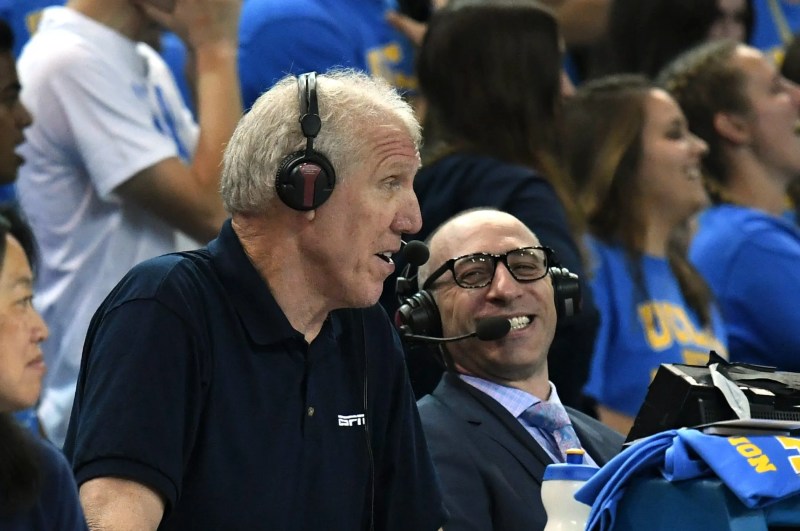
(C) USA Today
“When you talk to Boris Diaw—what a classical human being he is.”
Bill Walton, Broadcaster
In years after his retirement many grew up with a different image of Bill Walton. No longer was Walton just one of a pair of the greatest college players ever, or the perennially injured basketball virtuoso center. For most, Walton is remembered as a broadcaster for the professional, amateur and international ranks of basketball.
For Walton, it was a complete pivot. The center was widely known to suffer from a severe stutter, an affliction that made it difficult during his early years to advocate for himself and complicated his relationship with the press. This all changed when Walton met Marty Glickman, the radio broadcaster for the New York Knicks, Giants and Jets.
Glickman would coach Walton on how to speak, giving him tips and helping him apply the same lessons he learned under Coach Wooden to the world of speaking. Walton would start small, working his way from local news, the Continental Basketball Association and UCLA games before stumbling into a position with Ralph Lawler on the local Clippers broadcast and working with Roy Firestone in the Up Close studio.
Soon, Walton went everywhere; calling games for the NCAA, NBA and Olympics; working across CBS, NBC, ABC and ESPN; and pairing up with Steve “Snapper” Jones, Mike Tirico and Dave Pasch, among others. No matter where he went, Walton brought a candor to his broadcasts rarely found elsewhere, unafraid to give his opinion or set off in a diatribe.
Whether it’s comparing Suns forward Boris Diaw to Beethoven, telling Shaquille O’Neal to “throw it down, big man,” or demonstrating how to use dirt from Temecula, Walton retained the ability to surprise and entertain.
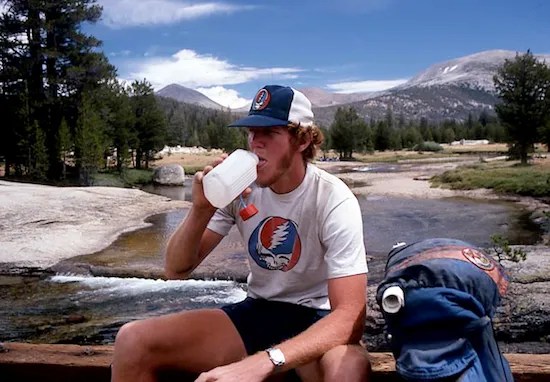
“After seven years of going to [Grateful Dead] concerts, I was now happily and proudly on their team. And on their team I remain.”
Bill Walton, Back From The Dead
Among the circles of the sports world, Bill Walton is often lauded as one of the biggest stars in basketball. In the world of music however, he was nicknamed the “World’s Biggest Deadhead.” From the title, chapters and paragraphs of his autobiography, to his countless conversations and encounters, Walton constantly found a throughline to the Grateful Dead. He was as likely to cite a maxim from Wooden’s Pyramid of Success as he was to drop a lyric from the Jerry Garcia/Robert Hunter songbook.
In an interview series with Rich Meijer, he tells stories comparing Larry Bird to Jerry Garcia, changing flights just to go to a show in Kansas City and the day he learned of Garcia’s passing. Beyond being a leader on the court, Walton loved following music off the court. However, he kept a certain distance from meeting his own idols. He describes the story of meeting the Grateful Dead as one where he finally decided to join the team.
It happened at the Paramount Theater in Portland, Oregon, now known as the Arlene Schnitzer Auditorium. The Grateful Dead, as usual, were playing to a packed house, but were confused why everyone was sitting down except for a skinny redhead in the center of the audience. Ram Rod, one of the band’s road crew and a native Oregonian, identified that redhead as Walton and sent stagehands to invite him backstage.
Eventually, Walton acquiesced and became a staple of the touring circuit for the band, attending over 800 shows, playing the drums during their concert before the Pyramids of Giza in 1978 and playing Father Time during their New Year’s Eve shows after the passing of Bill Graham. Among the band’s loyal Deadheads, Bill Walton was collectively known as a supporting participant, not the star, of the culture.

“Something like 20 surgeries later, Bill Walton is still healing. He looks forward and not back. That’s why he owns a black cat. He is telling the Gods of Bad Luck, ‘even after everything that just happened, you cannot break me.’”
Bill Simmons, The Book of Basketball
Bill Walton’s passing on May 27 triggered an outpouring of tributes and remembrances with countless stories, anecdotes and reveals of Walton’s character. More than anything, his colleagues did not focus largely on his accolades and superlatives as a basketball player. They focused on his all-conquering optimism, lust for life and inexhaustible humor; qualities he was not obligated to have or share, but would be understandable if he didn’t.
Walton’s career is regularly characterized as the greatest what-if of all time. Simmons notes in the book how, of all the basketball players in the foremost league in the world, Walton best understood “The Secret.” It’s a pet theory developed by Simmons that basketball is the sport that requires the most sacrifices, that it’s not all about big numbers, that one’s happiness can only come from a teammate’s success.
The theory bore out in more than just Walton’s playing career. Indelible as it was to Portland’s championship squad in 1977 and intangible to Boston’s triumph in 1986, the Secret can describe Walton’s approach to life and relationships. It compliments his connection to Wooden’s Pyramid of Success and the Grateful Dead in equal parts. In response, Walton ascribes it all to making a choice to play, live and win the way he did.
Walton is one of the greatest basketball players to ever live. Through his son Luke Walton (named for teammate Maurice Lucas), he is one of the few father-son duos to win multiple championships. Through his protests, writings and basketball camps for Native Americans, he was a modern model alongside Bill Russell and Kareem Abdul-Jabbar for the activist athlete. Through music and broadcasting, he was an outgoing member of more teams than just sports.
“I’m the lucky one,” Walton told GQ, “I never thought going through all of it that I would be healthy at the end.”

 The Casual Ramble
2 thoughts on “A Casual Ramble About Unraveling Bill Walton”